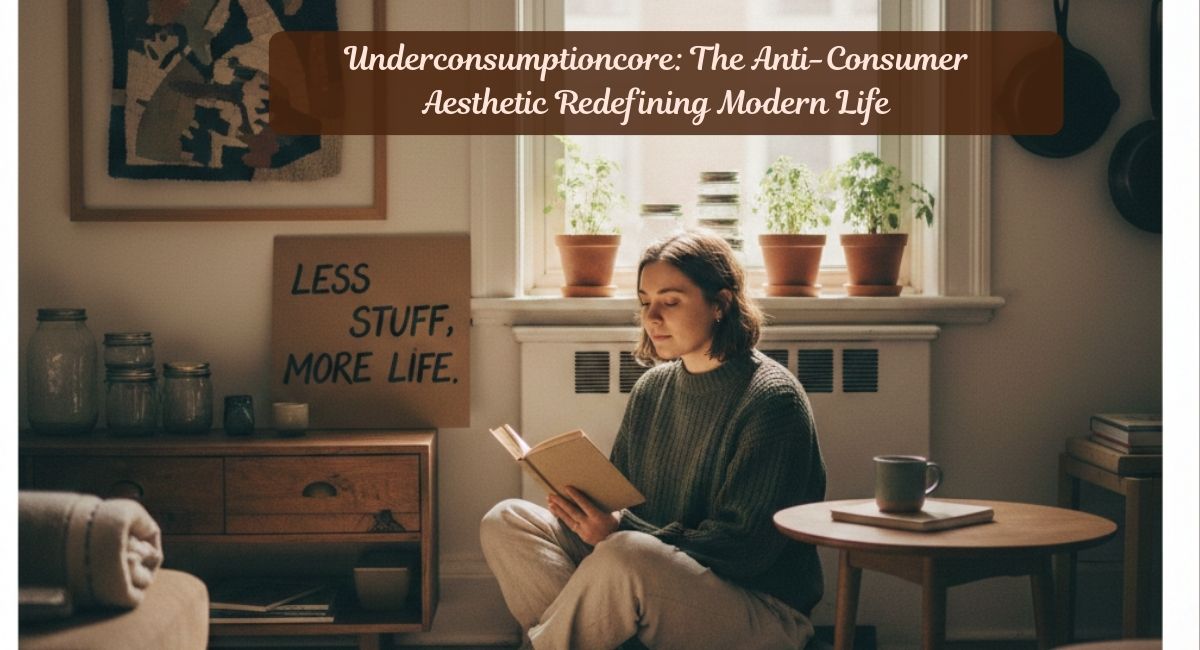
In recent years, a quiet but meaningful shift has been taking place across social media, home design, fashion, and personal habits. It does not announce itself with flashy packaging or trend-driven slogans. Instead, it shows up in repeated outfits, half-empty rooms, handwritten notes, repaired furniture, and an intentional pause before buying anything new. This movement is known as the underconsumptioncore aesthetic, and it represents a growing resistance to excessive buying and constant upgrading.
Unlike earlier minimalist movements that often leaned into expensive neutral design or curated scarcity, underconsumptioncore feels more lived-in and emotionally grounded. It reflects how people are rethinking value, time, and identity in a world that has long measured success by accumulation. This anti consumer aesthetic is not about deprivation. It is about choosing what stays and what quietly leaves.
At its heart, underconsumptioncore is less about how things look and more about how life feels when consumption no longer leads every decision. It intersects with the minimal lifestyle trend, slow living aesthetic, and mindful habits that prioritize care over excess. As more people question fast fashion, overfilled homes, and impulse-driven routines, underconsumptioncore has become a visual and cultural language for living with less noise.
Origins and Cultural Shift
The underconsumptioncore aesthetic did not appear overnight. It grew from overlapping frustrations that many people share. Rising living costs, environmental concerns, digital burnout, and the emotional fatigue of keeping up with trends all played a role. For years, social platforms promoted haul videos, restocks, and aesthetic overconsumption disguised as self-care. Eventually, a countercurrent formed.
Underconsumptioncore gained traction when creators began documenting the opposite. They wore the same clothes repeatedly without apology. They showed makeup products until the very last use. They shared small apartments without constant redecorating. These visuals resonated because they felt honest and approachable, similar to the real-life spaces highlighted in home aesthetic DIY content.
This aesthetic also reflects generational shifts. Younger adults who grew up witnessing financial instability, climate anxiety, and mass-produced lifestyles are questioning inherited ideas of success. The anti consumer aesthetic offers a way to opt out without disappearing. It demonstrates that participation in culture does not require constant buying.
Core Principles of Underconsumptioncore
The underconsumptioncore aesthetic is subtle and intentionally understated. It reveals itself through habits, repetition, and restraint rather than rigid visual rules. Key characteristics include:
- Wearing fewer outfits more often, focusing on comfort and durability instead of fleeting trends
- Using products fully before replacing them
- Decorating with items already owned rather than buying new for seasonal updates
- Repairing, repurposing, or choosing secondhand options whenever possible
- Sharing realistic, functional spaces instead of staged perfection
This approach connects closely with the minimal lifestyle trend while allowing personal warmth and sentimental items. It emphasizes intention over emptiness. In fashion, a well-loved leather jacket or a neutral wardrobe staple carries more identity than a closet full of disposable fast fashion, echoing content like brown leather jacket guides that value longevity and style.
Anti Consumer Aesthetic in Daily Life
The anti consumer aesthetic is about rethinking the relationship with goods. It challenges the idea that newness equals happiness or social relevance. Underconsumptioncore reframes aspiration from accumulation to sufficiency.
Traditional consumer culture thrives on urgency, promoting limited editions, seasonal must-haves, and marketing-driven anxieties. Underconsumptioncore slows this cycle, encouraging reflection and intentional choice. Practitioners often report reduced comparison fatigue, more time for meaningful relationships, and less stress from constant consumption.
The aesthetic also aligns with environmental awareness. By purchasing less and valuing durability, followers of underconsumptioncore reduce waste and the environmental impact of fast production, echoing themes in sustainability-focused lifestyle content.
Slow Living and Mindful Consumption
Slow living aesthetic plays a central role in underconsumptioncore. Both prioritize presence and rhythm over speed and excess. Activities such as cooking, journaling, walking, or creating art replace habitual buying, fostering fulfillment without consumption.
Homes influenced by this aesthetic are functional and comforting rather than flashy. Natural light, reused furniture, and minimal but meaningful decoration are common. DIY projects, like those featured in home aesthetic DIY, enhance personalization while supporting sustainability.
Mindful consumption quotes serve as gentle reminders for those adopting underconsumptioncore. Short, reflective phrases about valuing time over things or choosing quality over quantity resonate with followers. Similar content is often seen alongside wisdom quotes and soul healing quotes, reinforcing the emotional and philosophical dimension of this aesthetic.
Fashion and Lifestyle Choices
Fashion under underconsumptioncore emphasizes personal style over trend-following. Core habits include:
- Reducing yearly purchases
- Choosing durable fabrics and long-lasting pieces
- Mixing neutral staples with select personal accents
- Repairing or tailoring clothing rather than discarding it
Seasonal inspiration adapts items already owned instead of encouraging constant newness, aligning with curated outfit guides like fall outfit aesthetics and winter outfit ideas.
In lifestyle, slow and deliberate choices dominate routines. People focus on meaningful activities instead of consuming to fill time. This shift enhances mental clarity, reduces decision fatigue, and strengthens emotional resilience, supported by content such as mind quotes and positive quotes.
Psychological Benefits
Underconsumptioncore supports mental well-being by breaking cycles of instant gratification. Buying less encourages reflection and emotional regulation, helping individuals address underlying needs without relying on purchases.
Repeating familiar habits, like consistent wardrobe choices or maintaining a tidy home, reduces decision fatigue and increases focus on personal growth, relationships, and creativity. This is echoed in life quotes inspirational and words of encouragement content, reinforcing calm and intentional living.
Underconsumptioncore at Home
Home spaces guided by underconsumptioncore evolve gradually. Prioritizing functionality, durability, and comfort over trends creates environments that feel lived-in and authentic. Furniture and decor are maintained, repaired, and occasionally repurposed rather than replaced.
This philosophy emphasizes presence and emotional attachment. It encourages reflection and personal meaning, drawing parallels with themes in alone quotes and loneliness quotes that explore quiet spaces and personal grounding.
Common Misconceptions
Underconsumptioncore can be misinterpreted as extreme minimalism or deprivation. Critics may see it as performative or inaccessible. However, the essence of the aesthetic lies in intention. It does not require perfect restraint, nor does it judge financial circumstances. It simply asks: does this item or habit serve a lasting purpose?
Understanding this distinction helps practitioners apply the principles meaningfully without feeling restricted. The aesthetic remains flexible, adapting to different lifestyles while maintaining its anti consumer ethos.
Long-Term Cultural Impact
Underconsumptioncore is more than a trend; it is a gradual cultural shift. By promoting intentional buying, reflection, and sustainable practices, it influences fashion, design, and lifestyle choices. Its principles align with environmental awareness, mental health advocacy, and thoughtful living.
The aesthetic encourages participation in society without succumbing to pressure from consumer culture. It supports quiet rebellion through intentional living, personal fulfillment, and mindful consumption, creating an enduring movement in modern culture.
Integrating Underconsumptioncore Naturally
Adopting underconsumptioncore principles does not require labeling oneself. Many individuals practice its core ideas—like valuing quality, reusing, and slowing routines—without using the term. Recognizing these choices as intentional can increase satisfaction and confidence in daily life.
By incorporating practices like mindful consumption, slow living, and thoughtful wardrobe rotation, individuals can cultivate a lifestyle that prioritizes depth, sustainability, and well-being. This reinforces a sense of purpose and authenticity in modern life.